
Understanding the Menstrual Cycle and Hormonal Health
The menstrual cycle is a valuable indicator of overall health. It is sometimes described as a “fifth vital sign”, as changes in the cycle can reflect hormonal balance, stress levels, nutritional status, and underlying health concerns. Learning to understand the cycle allows for earlier awareness, a preventive approach, and more informed choices regarding reproductive health.
As a midwife, I support women in understanding their cycle across the life course, from puberty to the postpartum period and through to menopause.
Les différentes phases du cycle menstruel
The menstrual cycle is a dynamic process, shaped by hormonal variations that influence the body throughout the cycle. It is generally described in four phases, each with specific physiological characteristics.
Menstruation (periods)
marks the beginning of the cycle and corresponds to the shedding of the uterine lining when pregnancy has not occurred.
The follicular phase
gradually prepares the body for ovulation under the influence of hormones.
Ovulation
happens at a single moment and only once per cycle, and consists in the release of an egg from the follicule
The luteal phase
follows ovulation, supports hormonal balance, and prepares the body either for pregnancy or for the next period.
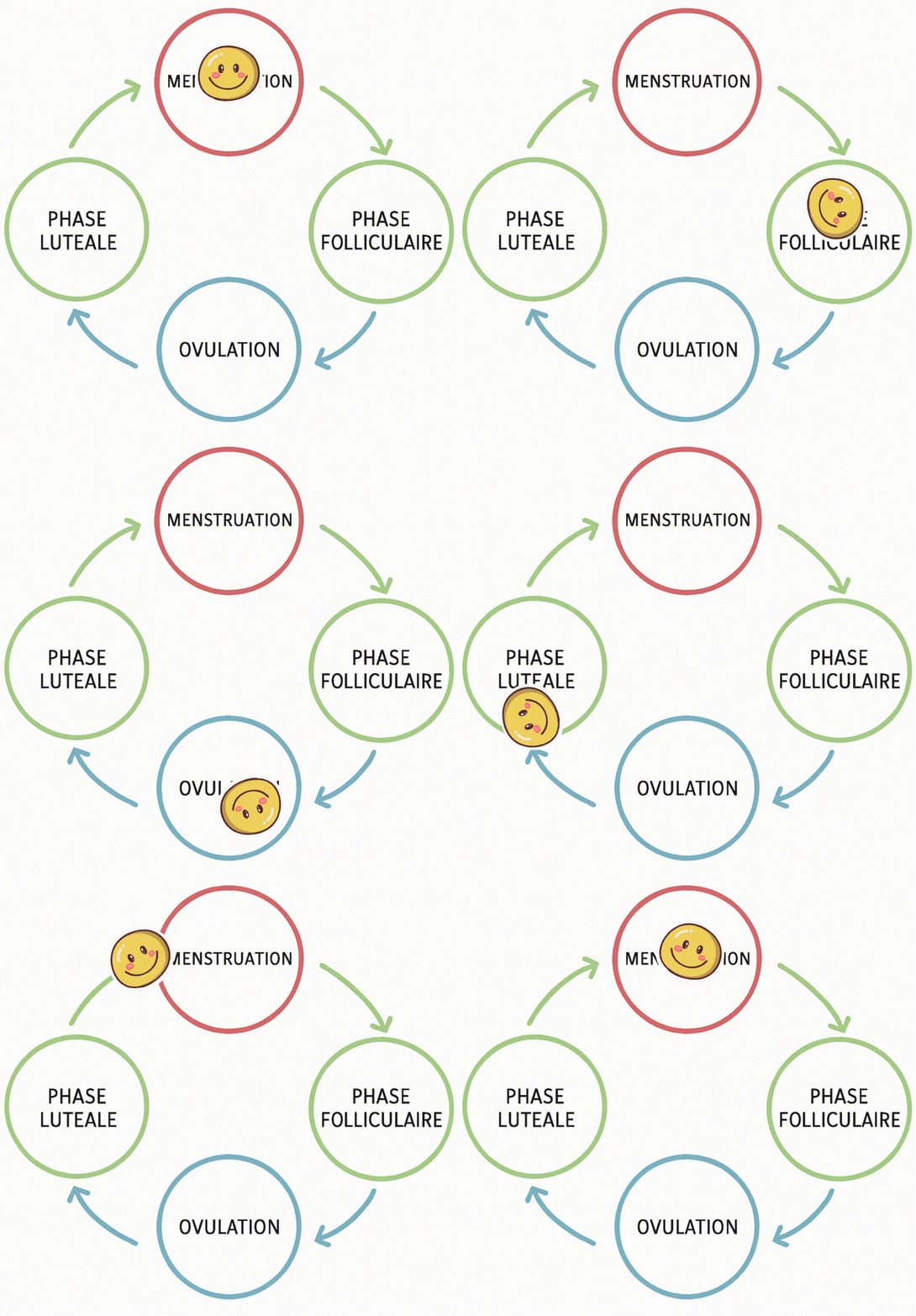
Chaque phase possède son propre profil hormonal et un rôle physiologique spécifique. Se familiariser avec ces phases permet de développer une compréhension plus fine de la fertilité, des symptômes et du bien-être global.
When is it helpful to pay attention to your menstrual cycle?
The menstrual cycle naturally evolves throughout life. Some variations are normal, while others may indicate that the body needs support or closer attention. It may be helpful to explore your cycle more closely in situations such as:
-
🔄 irregular, very long, or absent cycles,
-
⚠️ significant or unusual menstrual pain,
-
🩸 heavy or prolonged bleeding,
-
🌫 pronounced premenstrual symptoms,
-
🔁 after stopping hormonal contraception,
-
🤱 postpartum
-
🤍 trying to conceive
-
🌿 considering natural contraception,
-
🧠 a desire to better understand your hormonal functioning.

Charting your cycle does not necessarily mean looking for a problem, but learning to understand your unique cycle patterns, supporting your physiology with informed, holistic choices, and recognising when medical guidance may be helpful. Some observations may simply reflect the season of life you are in.
Being supported to better understand your cycle
Understanding the menstrual cycle is not about fixing the body, but about learning to observe, interpret, and connect physical signs with lived experience, in a way that respects physiology.
Support may help to:
🧭 clarify what is normal for you,
📊 interpret cycle observations accurately,
🔬 link the cycle, hormones, and symptoms,
⚖️ support menstrual and hormonal health,
🌱 adapt choices related to fertility,
🌿 explore natural contraception,
🤍 navigate different stages of reproductive life, including the postpartum period.
Depending on your needs, different types of support are available.
_edited.jpg)


Charting your cycles in a few words...

Fertility Awareness-Based Methods (FABMs), sometimes known as natural family planning, are approaches that help you track the body’s natural signs of fertility throughout the menstrual cycle—such as basal body temperature, cervical mucus, and cycle patterns. By identifying your fertile window, you and your partner can choose to have sex during that time if you wish to conceive, or avoid pregnancy by abstaining on fertile days or using a barrier method (such as condoms).
Beyond fertility, charting can also offer valuable insight into your overall health. Your cycle charts can help highlight patterns linked to factors such as sleep, stress, physical activity, and nutrition. With this information, you may be able to adjust certain habits, support hormone balance, ease symptoms such as PMS, painful periods, or irregular cycles, and improve your general wellbeing. Charting can also indicate when further medical assessment may be helpful.
What I offer
A personalised, physiology-centred approach
Your menstrual cycle is your fifth vital sign. During online consultations, I use fertility awareness methods (FAMM) as a clinical tool to help you better understand your cycle and support your hormonal health, while respecting your physiology and your individual rhythm.
Two types of consultations are offered:
8-session support programme
A structured and progressive programme designed to help you understand your cycle, support your hormonal health, and benefit from ongoing, personalised support.
-
🌱 Learning or deepening a fertility awareness method
-
⚖️ Supporting cycle health and hormonal balance
-
🤍 Guidance for conception or natural contraception
-
🧭 Personalised follow-up and continuity over time
Single support consultation
A focused, one-off consultation, ideal if you already have some experience with fertility awareness or if you have a specific question you would like to explore.
-
📊 Reviewing your menstrual cycle
-
❓ Addressing a specific question or concern
-
🔄 Adjusting an existing fertility awareness practice
-
🤍 Receiving targeted, short-term support
What You Will Need
To begin observing and charting your cycle, you will need two essential tools: a basal thermometer and a chart to record your observations regularly and consistently.
You can choose the chart format that best suits your preferences and lifestyle:
-
Paper charts – ideal if you enjoy a tangible and handwritten record
-
The Read Your Body app – a secure, intuitive, and practical digital option
A basal thermometer can be provided upon request.
With these simple tools, you will be able to chart accurately, gain a clearer understanding of your cycle, and develop greater confidence in your reproductive health.

